



A Note from Jennifer Muskat, Co-Founder
When someone you care for is living with dementia, the conversation tends to narrow quickly. Will she fall? Will he wander? Should she still be using the stove? These questions matter, and answering them well is a core part of what we do. But in complex cases, we often see care reduced to risk management alone, and something essential gets lost along the way.
A safe day is not always a good day. A person can be clean, fed, given medications on time, and protected from every hazard in the house, and still spend the afternoon bored, lonely, or feeling like a stranger in their own life. Dementia changes a great deal, but it doesn't erase the need for comfort, purpose, connection, and joy. In many ways, those needs grow stronger as other abilities fade.
This is where care at home has a unique opportunity. Home holds the things that make a person who they are: the kitchen where she cooked for her family for fifty years, the garden he still checks from the window, the favorite chair, the music, the small daily rituals. Task-based care tends to see these as hazards to work around. We see them as the foundation of a good day. So the question we ask isn't only "How do we prevent harm?" It's "How do we keep them safe while they keep living their life?" Sometimes the answer is removing the knife and keeping the kitchen. Folding laundry together. Walking to the mailbox side by side rather than never leaving the house.
This month, whether you're a family member or a professional supporting one, we're exploring what it looks like to hold safety and quality of life together, why the two don't have to compete, and how our care partners make room for identity and meaning in the everyday moments of care.
Below, you'll find the resource we're sharing this issue: Beyond Safety: A Decision Guide, a practical one-page tool for making dementia care decisions that keep your loved one safe and still living a life that feels like their own.
Jennifer Muskat
Co-Founder & Chief Client Officer, Full Bloom Memory Care
More Ways to Say Yes: Tools in the Home Environment
In a facility setting, safety can often mean a single rule applied to everyone. At home, with one Memory Care Partner focused on one person or a couple, we have far more options. Instead of choosing between "safe" and "still themselves," our MCPs can adjust the details until both are true.
Here are some of the levers our Memory Care Partners pull every day:
- Timing. If afternoons bring restlessness, we move the walk to the morning and save quiet activities for later in the day. The activity stays; only the clock changes.
- Presence. Many activities that aren't safe alone become safe side by side. Chopping vegetables, stepping into the garden, or taking a shower can stay part of life with someone right there.
- The space itself. Small changes like better lighting, a clear path to the bathroom, or labeled cabinets can prevent a fall or a frustrated moment without taking anything away.
- Knowing the person. When a care partner knows their client was a nurse, or that he ran a hardware store, the day can include work that feels familiar: sorting supplies, tidying a toolbox, or even folding towels.
- Adjusting in real time. One-on-one care means we notice when something changes, like a new unsteadiness or a harder evening, and we adapt the plan alongside the family instead of waiting for a crisis.
None of these are big interventions. But together, they turn a list of restrictions into a day with real choices in it.
Want to talk through what this could look like for a client or loved one? Get in touch with us and we'll help you build a plan that honors both safety and a good day.
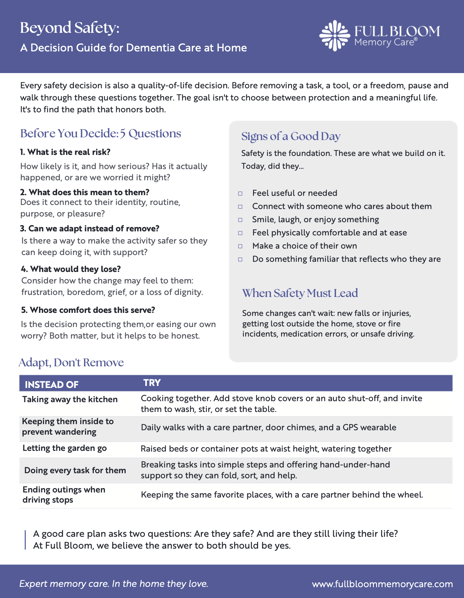
Beyond Safety: A Decision Guide
Whether you're caring for someone at home or guiding a family through their options, Beyond Safety: A Decision Guide offers a calm, practical framework for decisions that often feel impossible. Keep it on the fridge, bring it to a care meeting, or share it with a family who needs it.
October Community Events

Dementia Caregiver Support Group
Thursday, October 15th, 4:00pm - 5:00pm
The Laurel In Vernon Hills, 350 S Milwaukee Ave, Vernon Hills, IL 60061
Caring for someone living with dementia can feel isolating. Support groups offer a safe, confidential space to connect with others who understand, learn more about dementia, and trade practical ideas for the challenges you face each day. Many participants find lasting friendships along the way.
Memory Café at Dickinson Hall
Tuesday, October 20th, 10:00am - 11:30am
Dickinson Hall, 100 E Old Mill Rd, Lake Forest, IL 60045
Memory Café is a warm, welcoming gathering where people living with memory loss and their care partners can connect, enjoy time together, and find support. This month, the Lake County Forest Preserves brings fossils, relics, and other fascinating objects from our own backyard for a hands-on morning of touching, exploring, and sharing stories.

2026 North Shore Walk to End Alzheimer's
Sunday, October 25th, 10:00am - 1:00pm
Gallery Park, 2001 Patriot Blvd., Glenview, IL 60026
This event was rescheduled due to inclement weather last month.
Full Bloom is proud to sponsor the 2026 Walk to End Alzheimer's – North Shore, IL, taking place Sunday, October 25th at Gallery Park in Glenview. Every step raises funds for care, support, and research, and we're honored to stand alongside the families and community we serve.

Caring for a Partner with Dementia: Love and Loss
Wednesday, October 28th, 9:30am - 11:00am
North Shore Senior Center, 161 Northfield Road, Northfield, IL 60093
When the person you've shared your life with is changing, it's possible to grieve someone who is still right beside you. This workshop, led by Kim Hassenfeld, LCSW, and Glenn Earich, Caregiver Outreach Specialist at North Shore Senior Center, offers space to name that experience and practical tools to carry you forward.
The Bloom Bookshelf
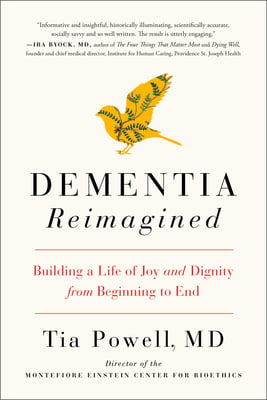
Dementia Reimagined: Building a Life of Joy and Dignity from Beginning to End
by Dr. Tia Powell
Psychiatrist and bioethicist Tia Powell brings both professional expertise and personal experience to this thoughtful book, having watched dementia affect her own family. She traces how our culture has understood dementia over time and makes a compelling case for shifting our focus from cure alone to care: how we can help people living with dementia experience comfort, dignity, and even joy at every stage. Honest, compassionate, and deeply practical, it's a fitting companion to this month's conversation about holding safety and quality of life together.
Available at Lake Forest Book Store and other retailers nationwide. Purchase Here
Learn more about our unique approach to in-home memory care, or call us at 847-407-1450 to see how we can help.