


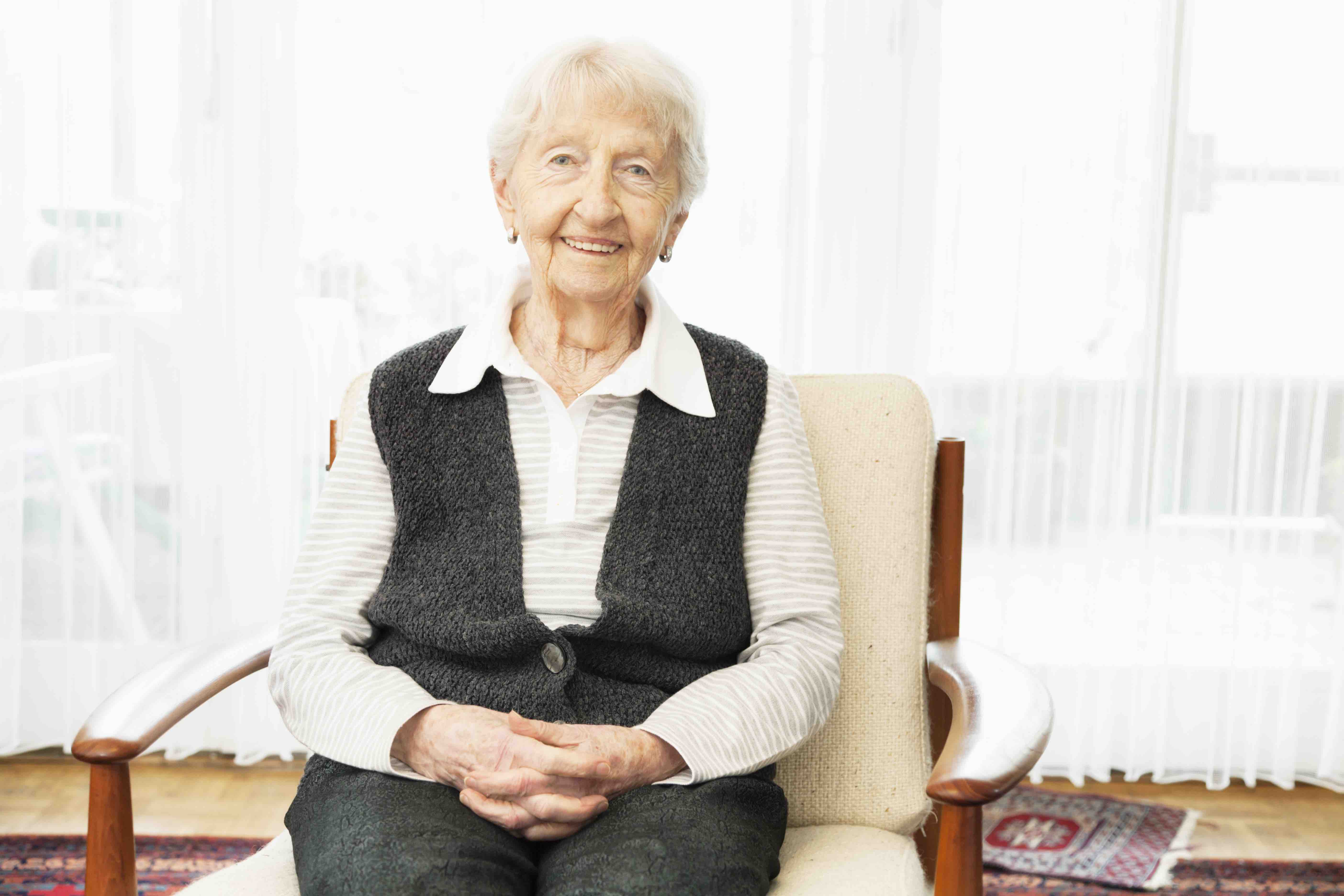
You've seen the signs. The missed medications. The unopened mail piling up. The near-miss on the stove. You've gently brought it up (more than once) and every time, you've hit the same wall.
"I'm fine."
"I don't need anyone coming into my home."
"Stop treating me like a child."
It can feel like your loved one is being stubborn, refusing to see what's right in front of them. But in most cases, they genuinely cannot see it. This isn't stubbornness. It isn't denial. It's a neurological condition, and once you understand it, everything about how you approach care changes.
Anosognosia: the Condition Most Families Have Never Heard Of
The medical term is anosognosia (ah-no-SOG-no-see-ah), from the Greek for "without knowledge of disease." The Alzheimer's Association describes it as a symptom of dementia that prevents a person from recognizing their own impairment, not because they're choosing to ignore the problem, but because the parts of the brain responsible for self-awareness have been damaged by the disease itself.
Your loved one isn't in denial. They are neurologically unable to perceive that anything is wrong.
Research estimates that 60–81% of people with Alzheimer's disease have some form of anosognosia. Some studies place the figure higher in moderate to late stages. It's one of the most common features of dementia, and one of the least talked about.
So ask yourself: if your loved one genuinely believes they are fine, that their memory is intact, that they don't need help—why would they ever agree to accept care?
They won't. Not directly. Not by being convinced. The question families have to stop asking is "How do I get them to agree?" and start asking "How do I help them feel safe enough to accept support?" Those are very different questions, and they lead to very different approaches.
Why Families Get Stuck
1. Their identity is still intact, even when their abilities aren't.
Your loved one may have spent decades as the capable, independent one in the family. That self-image doesn't disappear with a diagnosis. For someone with anosognosia, it's entirely intact — because the disease has erased the awareness that anything has shifted. The mere presence of a caregiver feels like an insult, a signal that something is wrong when they perceive nothing wrong at all.
What helps: Don't frame care as help with what they can no longer do. Frame it around you. "It would give me peace of mind" lands very differently than "You need someone to watch you."
2. The family is divided.
Siblings who live in different cities often have very different pictures of what's happening. The one nearby has been quietly managing a slow crisis for months. The one who visits twice a year sees their parent at their best. When families argue about it in front of the person with dementia, it increases distress and deepens resistance to any form of care.
What helps: Bring in a neutral third party before the family conversation. A geriatric care manager is trained specifically for this — they assess the full picture, mediate family dynamics, and often introduce the topic of care far more successfully than any family member can.
3. The legal and ethical reality.
Families often ask: Can I just force this? If your loved one is legally competent, the answer is no. Competent adults have the right to make choices others disagree with, including choices that carry risk. Once a person is determined to lack decision-making capacity, a designated healthcare Power of Attorney can make residential and care decisions on their behalf. Guardianship is a legal option in more extreme cases, but it's a difficult process with no guaranteed outcome, and it often fractures family relationships in the process.
This is why the most effective approach isn't force. It's trust, built carefully, over time.
Two Paths: What Memory Care Communities Do, and What Specialized In-Home Care Does Differently
Memory Care Communities' Approach
Memory care communities provide 24-hour staffing, secured environments, and staff trained in dementia-specific communication. For many families, a community is the right answer, especially if finances are a concern.
When it comes to a reluctant resident, skilled communities use relationship-first introductions, calm and simple language, redirection over correction, and structured daily routines that become familiar and comforting over time.
Senior Living Advisor Adair Nelson says, "We've never told my mom that she's going to be in memory care for the rest of her life. We've said, 'This is where you're going to go now. They can help you with the things that you need help with.' As time passes, she brings up coming home a whole lot less."
The honest challenge is that the transition itself is all-or-nothing. Moving day arrives. The adjustment begins. For someone with no framework for why their life has suddenly changed, the first weeks are often very hard.
Full Bloom Memory Care's Approach
At Full Bloom, our entire model is built around one foundational truth: trust cannot be rushed. But it can be earned, incrementally.
We don't arrive on day one asking your loved one to accept a caregiver. We start with something small. Something that feels natural, even helpful, to someone who believes they don't need help. Maybe that's someone who comes to help with the dog, or to do a few loads of laundry, or to help with the garden. The task is almost beside the point. What we're building is a relationship: a familiar face, a person they come to expect and, eventually, to like.
"We start where the person is, not where the family needs them to be," says Jennifer Muskat, Co-Founder and Chief Client Officer at Full Bloom. "For someone who has no awareness that they have dementia, being told they need a caregiver makes no sense to them. So we don't start there. We start with something they can accept. From there, trust grows, and trust opens the door to everything else."
As the caregiver becomes a trusted presence, their role naturally expands. They're no longer a stranger. They're a friend who happens to help with medications, who notices when something is off, who knows without being told what brings comfort and what doesn't.
This incremental path isn't possible when a facility move is the first step. It's the distinct advantage of home-based care.
The Life Story: Caring for the Whole Person
Every Full Bloom client relationship begins with what we call the Life Story: a comprehensive, whole-person assessment that goes far beyond a medical intake. It captures who this person is: their career, their passions, their daily rhythms, what brings them comfort, what triggers distress, the music they love, how they take their coffee, the names they prefer to be called.
This isn't background. It's the foundation of care. When a caregiver knows your father was a jazz musician who still lights up at a saxophone, who coached Little League, who never stopped caring about the Cub, they can connect with him as a person, not a diagnosis. That connection is what makes the incremental approach work. And for someone with dementia who can't always explain why they feel safe with one person and unsettled with another, the feeling is everything. Here are a few examples of how we've helped some of our clients build trust and a lasting relationship with us.
Where to Start
You don't have to wait for a crisis. In fact, the earlier you begin, the more options you have.
1. Stop trying to convince. You cannot reason someone into awareness they are neurologically unable to access. Shift your energy toward creating safety, not winning an argument.
2. Introduce small forms of help first: meal delivery, a friendly visitor, someone to "help with errands." These are entry points that feel acceptable long before full caregiving does.
3. Involve a neutral professional early. A geriatric care manager can introduce the idea of support in a way that lands better coming from someone outside the family.
And talk to us. We help families navigate exactly this situation every day, starting where your loved one is, and going from there together.
Let's talk about your loved one's care.
Frequently Asked Questions
What is anosognosia, and how is it different from denial?
Anosognosia is a neurological symptom of dementia in which a person is genuinely unable to perceive their own cognitive impairment. It's caused by physical changes in the brain — specifically damage to the regions responsible for self-awareness — and is not a choice or a coping mechanism. Denial, by contrast, is psychological: a person in denial understands on some level that a problem exists but resists accepting it. With anosognosia, there is no underlying awareness to break through. The person truly believes nothing is wrong.
How common is anosognosia in people with dementia?
Very common. Research estimates that 60–81% of people with Alzheimer's disease experience some form of anosognosia. Some studies, particularly those examining moderate to late-stage dementia, place the figure even higher. It is one of the most prevalent, and least discussed, features of the disease.
Can I legally force my parent with dementia to accept care or move to a memory care community?
If your loved one is still considered legally competent, they cannot be forced into care. Adults retain the right to make their own decisions, even ones that carry risk. If a person has been determined to lack decision-making capacity, a designated healthcare Power of Attorney can make care and residential decisions on their behalf. In cases where no POA exists and safety is at serious risk, families may pursue guardianship through the courts — but this is a lengthy, emotionally difficult process with no guaranteed outcome. Most care professionals recommend exhausting all trust-based, relationship-first approaches before considering legal action.
What is the best way to get a parent with dementia to accept help at home?
The most effective approach is incremental. Rather than introducing a caregiver as "someone who is here to help you," start with a single, low-stakes point of connection: help with a pet, a household task, or simply a friendly visit. The goal in the early stages is relationship, not caregiving. As familiarity and trust build over time, the caregiver's role can expand naturally. This approach works with the reality of anosognosia rather than against it, because it doesn't require your loved one to acknowledge a need they cannot perceive.